
‘A compelling narrative account of each stage of the story … This is high-quality historical journalism.’—Geoff Bertram
‘A timely reminder of the merits of understanding the past in its own terms.’—Malcolm McKinnon
How did organised labour, once a major force in national life, lose its position of strength and influence?
The Cost of Living is an authoritative account of the rise and fall of New Zealand’s largest union body, the Federation of Labour (FOL), during perhaps the most turbulent era in our modern history.
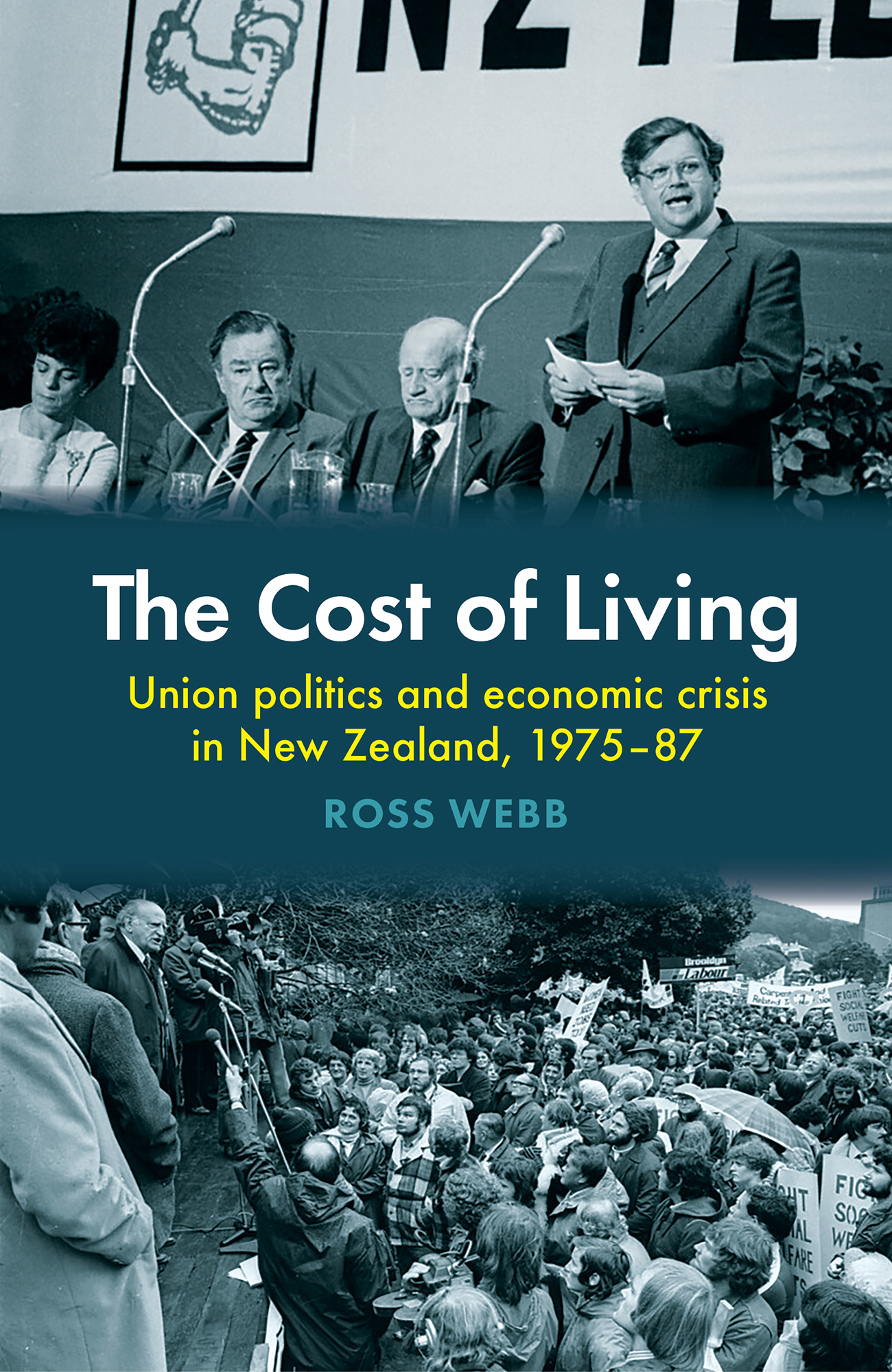
Opening with a charged televised confrontation between FOL President Tom Skinner and National Party leader Robert Muldoon, Ross Webb traces the organisation’s rise to the height of its power in the mid-1970s. What follows is the dramatic story of how the FOL wielded, defended and ultimately lost that power amid economic crisis, anti-union politics and radical economic reforms in the decade that followed.
Drawing on extensive archival research, media sources and oral histories, Webb paints a vivid picture of an era defined by inflation, rising unemployment, industrial conflict and economic crisis. He shows how these forces undermined the postwar commitment to full employment and weakened the place of organised labour in national life, while offering new insights into employer organisations, anti-union movements and the increasingly fractured relationship between unions and the Labour Party.
The Cost of Living examines power, conflict and the consequences of economic change, situating the FOL within the defining economic battles of its era – over wages, inflation and living standards. In doing so, it offers timely historical context for current discussions about workers’ rights, inequality and economic policy.
The Cost of LivingApproaching half a century in the past, the years 1975 to 1987 retain a weight in New Zealand political discourse unmatched by any other period, yet too often they are reduced to a tale of cartoon heroes and villains. Webb’s thoroughly researched and thoughtful analysis of those years through the lens of the Federation of Labour is a timely reminder of the merits of understanding the past in its own terms. He recovers a compelling story of an organisation that, though ultimately overtaken by circumstances, ran successful campaigns and crafted credible strategies challenging the often harsh, anti-union policies pursued by governments of the day.
—Malcolm McKinnon

Ross Webb
Ross Webb is an historian based in Lower Hutt. He holds a PhD in history from Te Herenga Waka Victoria University of Wellington, and is a co-author of Te Hau Kāinga: The Māori home front during the Second World War (Auckland University Press, 2024).
More About Ross Webb