

Hiding Places
‘She drinks coffee until she can drink wine and then she goes to sleep so that she can wake up and drink coffee until she can drink wine again. Is this not the story of every mother, she asks herself.’
Hiding Places is a compelling and beautifully written meditation on early motherhood and creativity. Told through a series of fragments that range from raw and troubled to delightful and hilarious, this remarkable book responds to the unexpected shocks and discoveries of becoming a mother, drawing on excerpts from family letters and secretive medical records, and advice contained in Truby King’s 1913 tract, Feeding and Care of Baby.
Partly a slowly unfurling unsent love letter to an admired writer, partly a ‘book of essays that is a notebook about trying to write a book of essays’, and partly an attempt to simply hang on through tumultuous times, Hiding Places deftly blends personal reflection with family history, social critique and literary analysis. The result is a fresh, funny and deeply moving look at what it means to care and to create – at what gets lost or hidden in the process, and what is found or revealed. ‘It’s not what she says,’ writes Edmeades, ‘but how she says it that reveals what hides beneath.’
Resonant with, yet distinct from, the works of writers like Maggie Nelson, Kate Zambreno, Olga Ravn and Chris Kraus, Hiding Places is an inspiring read for anyone interested in the dangerous yet fruitful zones where life and art overlap.
‘Hiding Places is offbeat, leaky, humorous, fragmented and uncertain of itself. I enjoyed spending time with this spiky narrator: her anxieties, her obsessions, her kleptomania, her failure to comply. She is the bad mother in defiance of Truby King’s alarming and dysfunctional child-rearing rules, quietly rebelling and disintegrating inside a system that still echoes and replicates his admonishments. A fascinating and funny anti-hero.’—Tina Makereti‘This book is so smart. So honest. So funny. So provocative. So humane. So rapturously thoughtful. It is “please stop bothering me, I’m reading something really good” level of good.’—Emilie Pine
| Preview this book |
| Hiding Places |
'Lynley’s genre-defying book grafts or splices together wildly diverse forms. From page to page, it spins like a tombola wheel, so we’re dazzled by the shift from tone to tone; and from story, to essay, to sent and unsent letters, to her grandfather’s medical records and to personal reflection. There is what you might call confession; yet there is also deliberate evasion, as it sometimes overtly performs hiding, through using techniques like using black-out text. It also grafts all the forms I’ve just mentioned with quotations, literary criticism, diary-like fretting and notes on the writing process itself. In doing so, the book brings out into the open the intense effort behind several endeavours. Endeavours like scholarship and academia; creative writing; early motherhood, and the work of trying to excavate the why and the how behind periods of personal, family, and what we might call society-wide psychological disorder, or troubled mental health.'
Emma Neale at the launch Read
'The strands of this compilation are interwoven and ever-changing, so I found my mind constantly turning in a new direction. Each page or entry brought a different response: I was by turns empathetic, amused, shocked, curious and sometimes confused and unsure of what to think. Reading through, I was fuelled with anticipation, looking for connections and developments. Looking back on the thread that related most to my own experiences, I found the rawness and the unflinching accounts of the psychological and physical load of being a new mother particularly resonated. I was drawn in by the intense, fragmented writing as the author looked for meaning in ‘hidden places’ and found myself returning again and again to re-read, like the writer, to the story, ‘the place where hovering happens’.'
Clare Lyon for NZ Booklovers Read
'I love a book with an interesting form, and this one ticked all the boxes. I read Hiding Places in two sittings over one rainy Wellington Sunday, compelled by its bite-sized digressions, stories, extracts and observations. It’s not what she says but how she says it that reveals what hides beneath,’ the narrator says, and ‘how she says it’ forms the basis of this book. Woven through with ‘stories’, as well as excerpts from a 1913 childcare manual, found poems, responses to other texts and the lovely letters to ‘K’, this hybrid text creates a real/not-real, me/not me structure of suggestion and reference – a way of talking about what matters to us most, but telling it slant. And the result is rich, complex, skittish and intelligent.'
Sarah Scott for Kete Books Read
'I couldn’t have written this book if I’d tried, because I never had an intention. I never went out to think, ‘this is the type of book I’m writing.’ So, it’s almost like a diary of trying to write a book, which sounds quite self-indulgent and possibly is, but it’s almost diaristic. It’s tracking a journey. I think it will appeal to young mothers trying to figure it all out, as well as people interested in motherhood as an institution. There’s also this strand of auto-fiction and auto-theory. I’m doing this literary analysis of my own thinking at the same time.'
Lynley Edmeades speaks to Jeff Harford for Write Spot, OAR FM with the City of Literature Dunedin) Read
'Through fragmentation and poetic exposition, Hiding Places attempts to trace lines of inherited and intergenerational attitudes toward parenthood and mental health throughout the 20th and early 21st centuries. As a 1980s child raised in rural New Zealand, I use the book to examine the threads of this foundational document – survived through institutions like Plunket – throughout my childhood and into my own matrescence. The book tries to make connections between some of [Truby] King’s early regimes and my contemporary failure to be a “good” mother, whatever that might mean.'
Lynley Edmeades writes about examining the work of Truby King in her book Hiding Places for the Spinoff Read
'I suspect all writing is a form of hiding, if we really examine it. If I write a biography of someone, I’m hiding myself within the story of someone else. Likewise, a novel. If I write a poem, I’m often seeking clarity by hiding myself in the language or the form. I can’t speak for all writers, but there’s something necessary for me about this: the play, I guess; the wanting to hide then be found, hide and be found — like a tension and release. A rhythm, or maybe a kind of dance. Something in duration, in motion. Something happening inside the text — again, the doing and saying.'
Lynley Edmeades speaks to Thomas Pors Koed from Volume Books Read
'To reduce a multifaceted book to a simple component is never easy, as many will understand if they’ve ever faced the daunting task of devising a synopsis for their magnum opus. At its core, though, what can be said of Lynley Edmeades’ Hiding Places is that it’s a book about motherhood: the experience, expectation, pathology, literature, constraint, liberation, dream, struggle, pain—and yes, wonder—of that most personal and contestable of matters. This book is structured as a series of concise parts, which sounds as if it’s a short offering when, in fact, at 244 pages, it’s quite the reverse. It’s this expansiveness, the wide-ranging nature of Hiding Places, which best evokes the far-reaching intent of its author to realise what a story can be ... What results, then, isn’t just a narrative blending of fiction and fact, letter and literature, storytelling and crisp poetic prose, but also a synthesis of intricate tones and emotions experienced when devising, as the author prefaces her book, ‘a story about a book about becoming a mother’.’
Siobhan Harvey for Landfall Tauraka Review Read
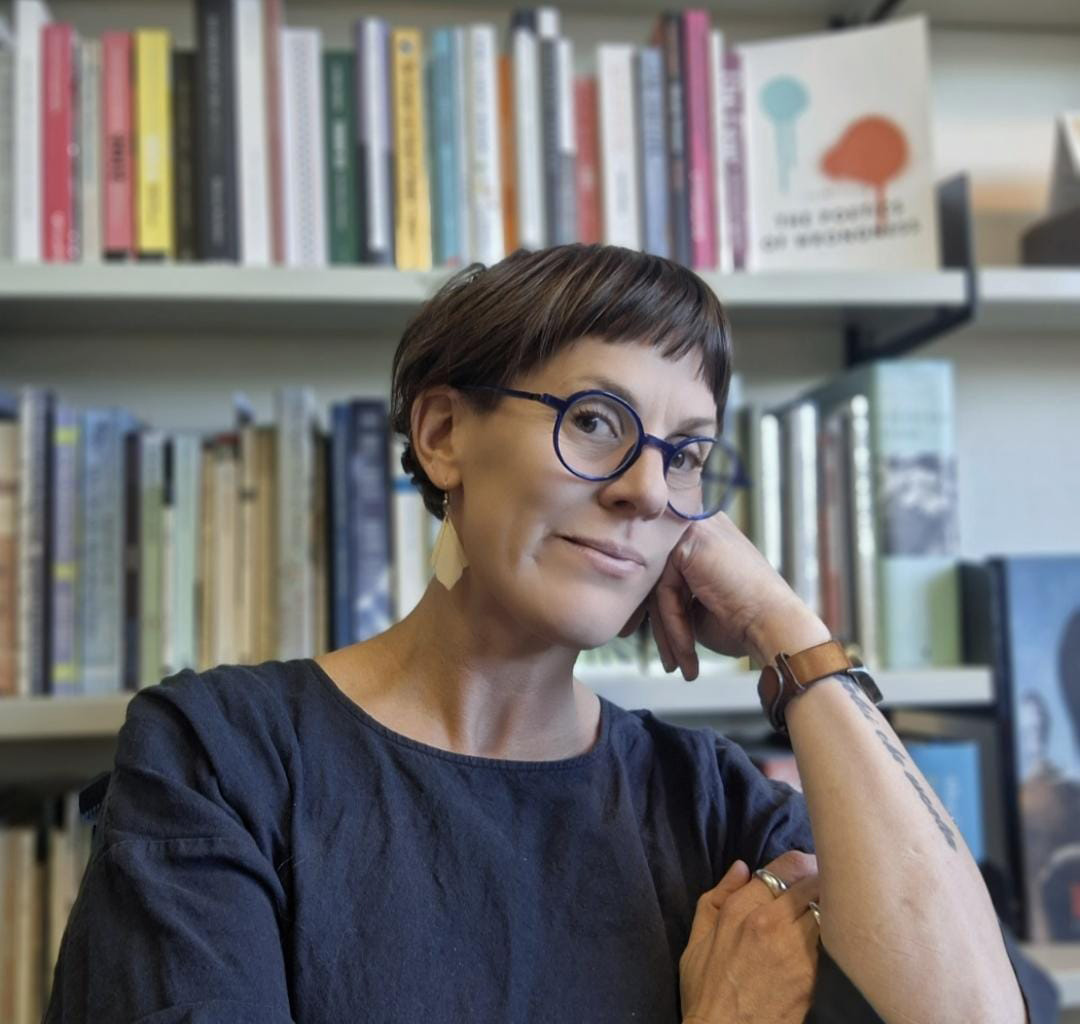
Lynley Edmeades
Lynley Edmeades is the author of the creative non-fiction book Hiding Places (Otago University Press 2025); two poetry collections, As the Verb Tenses (Otago University Press, 2016) and Listening In (Otago University Press, 2019); and a poetry and art picture book for adults, Bordering on Miraculous (Massey University Press, 2022), in collaboration with Saskia Leek. She currently teaches poetry and creative writing on the English programme at the University of Otago. She is the current editor of Landfall Tauraka and teaches English and creative writing at Ōtākou Whakaihu Waka.
More About Lynley Edmeades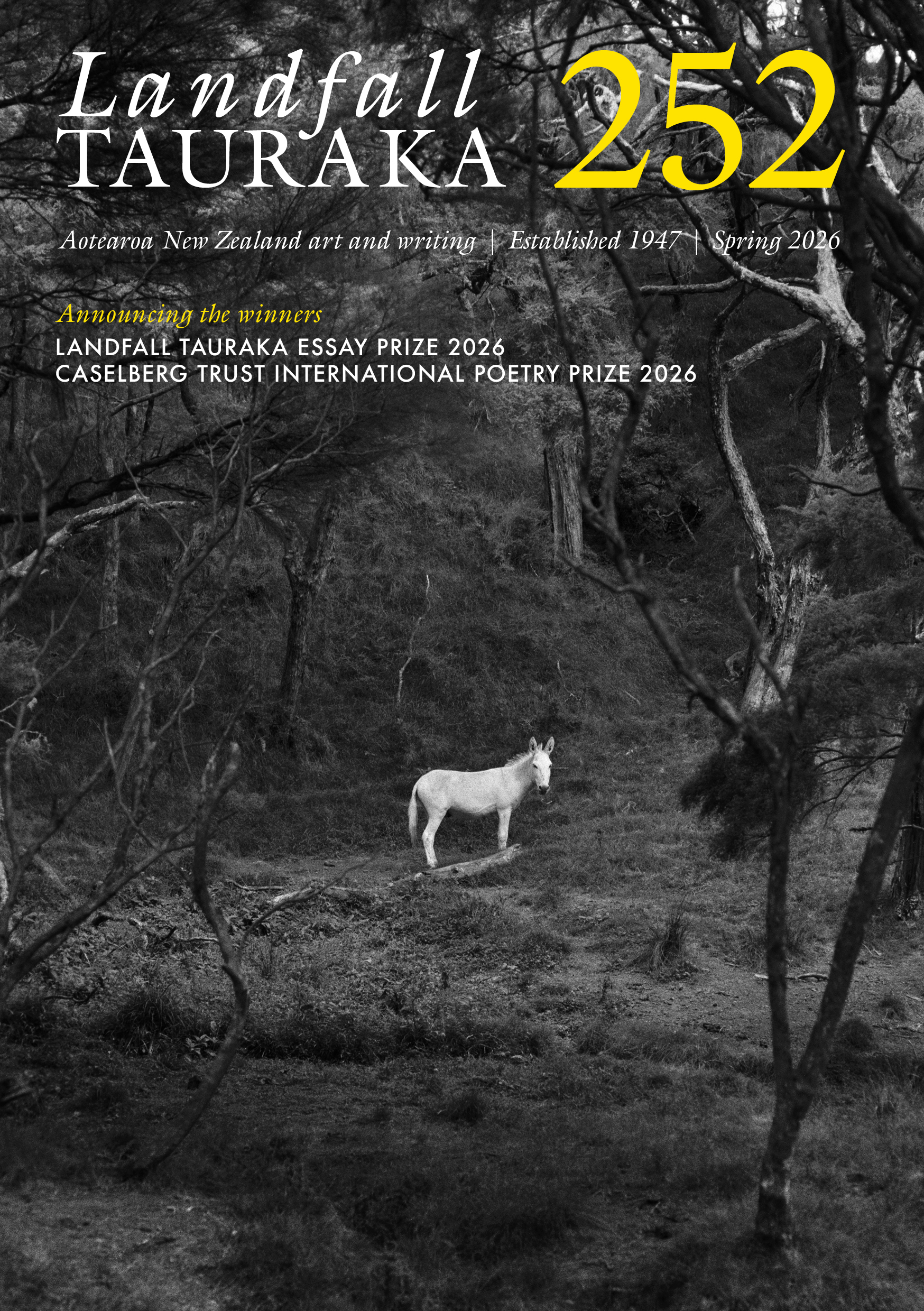 Landfall Tauraka 252
 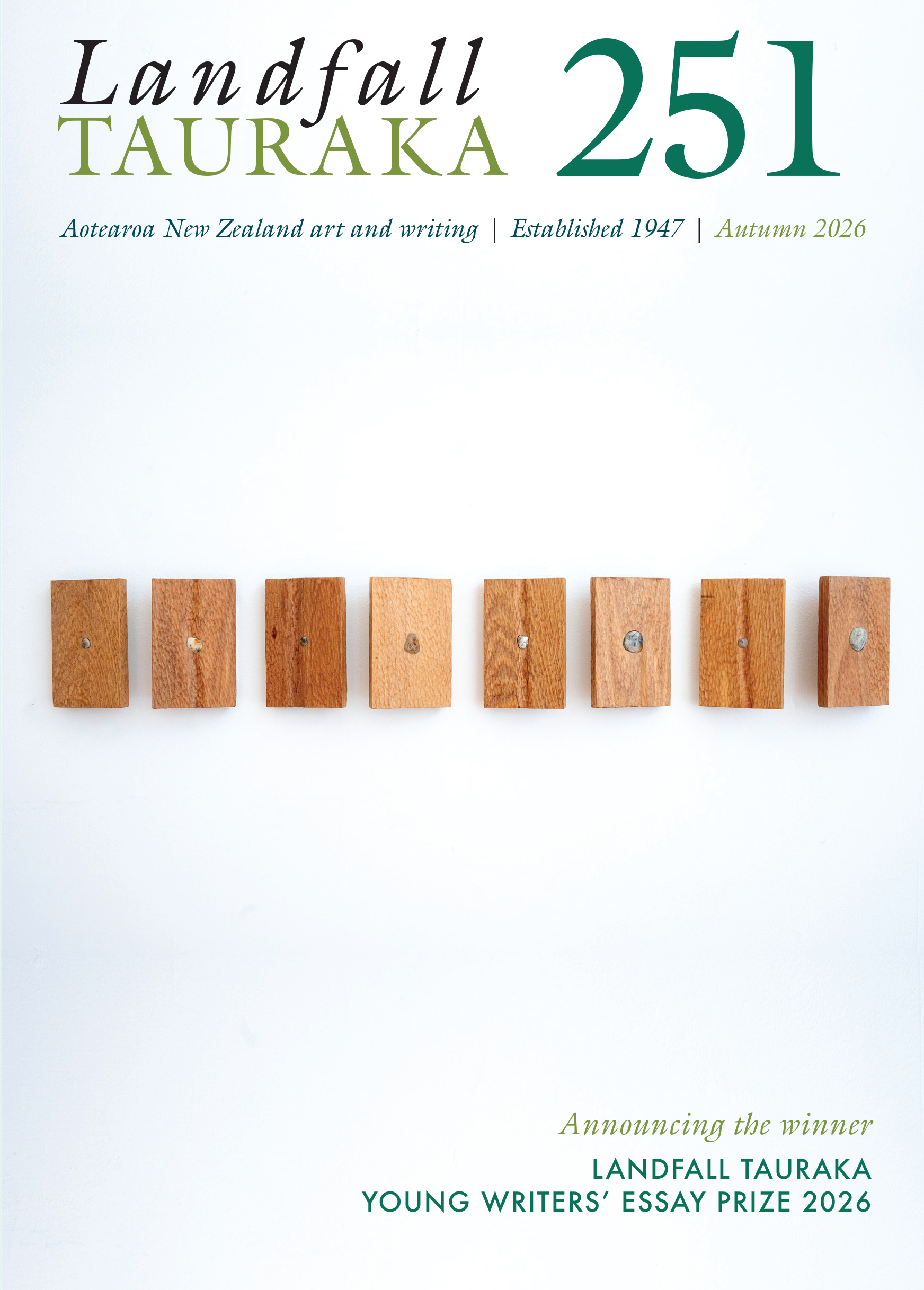 Landfall Tauraka 251
 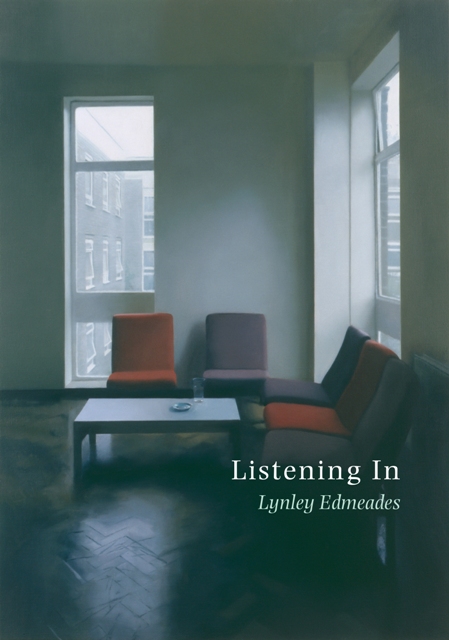 Listening In
 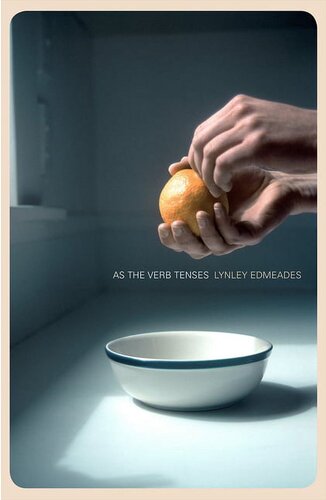 As the Verb Tenses